
Pet Stain & Odor Removal Katy TX
Enzyme treatment for urine, pet accidents, pad-level odor, and spots that return during humid Katy weather.
Katy, TX, Cinco Ranch, Cross Creek Ranch, Firethorne, Elyson, Fulshear, Brookshire, and the west Houston corridor · Calls may be recorded for quality and training purposes.
Katy is a pet town. Between Cinco Ranch, Cross Creek Ranch, Firethorne, and the rest of the master-planned communities, a huge share of our carpet calls involve a dog, a cat, or both. Most pet accidents are not the problem the homeowner thinks they are. The visible stain on the surface is maybe a third of the issue. Urine passes through the carpet fiber, through the backing, and into the pad — and a surprising amount of it runs laterally once it hits the subfloor, so the area that needs treating is often two to three times larger than what you can see.
That is why perfume-based "pet odor removers" almost never work, and why steam cleaning alone can make the smell worse for a day: the water re-hydrates the dried uric-acid crystals under the carpet, reactivating the odor as it dries. Real pet stain and odor removal in Katy, TX means breaking those crystals down at the molecular level with an enzyme solution that reaches the pad and the subfloor — and then extracting the residue out, not sealing it in.
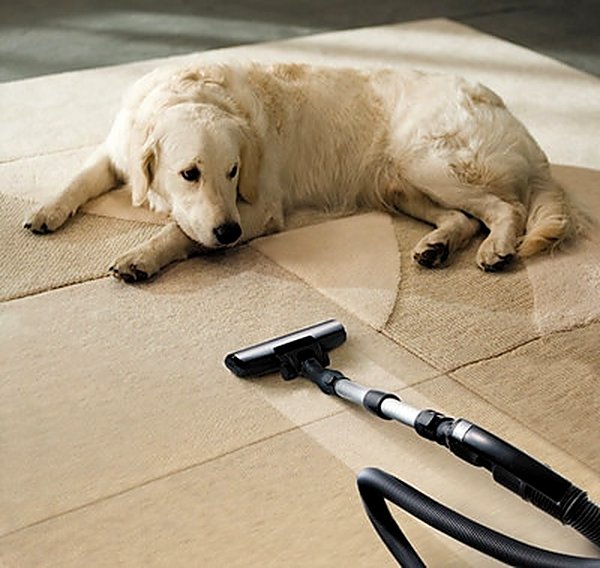
Our pet-stain and odor process
- Locate with a UV light and moisture probe. Dried urine fluoresces under blacklight and reads wet on a moisture probe even when the surface looks dry, so we find every spot — including the ones behind the couch you did not know about.
- Saturate the pad with enzyme solution. The product is poured to the backing so it reaches the pad and subfloor, where the crystals actually live. It sits to work for the time the chemistry requires.
- Subsurface extraction. A weighted extraction tool pulls the loosened waste back up through the carpet and out of the home, rather than leaving it to dry underneath.
- Severe cases: pad pull and replace. When a pet has repeatedly hit one area, the pad is ruined and the subfloor may need sealing. We lift the carpet, replace the pad, seal the subfloor, and reinstall and clean the carpet — quoted up front.
What to do before we get there
What happens in the first hour after an accident — and in the days before we arrive — makes a real difference in the result. Five things worth knowing:
- Blot, don't scrub. Press plain paper towels into a fresh accident until nothing more transfers. Scrubbing untwists the carpet fiber and leaves a permanently fuzzy patch even after the stain itself is gone.
- Skip the ammonia and "oxy" products. Ammonia smells like more urine to a pet and invites a repeat in the same spot. Some oxidizers permanently lighten carpet dye — turning a removable stain into a bleach spot nothing can fix.
- Don't run a rental machine over urine. Flooding the spot without subsurface extraction spreads the urine laterally through the pad, turning one treatment area into three.
- Mark the spots. A bit of painter's tape at each accident site means nothing gets missed on the walk-through — including the spots that have dried invisible.
- Plan to keep the pet out. The treated area needs to dry undisturbed; a pet walking (or re-marking) a damp treatment undoes it.
Pet urine vs. pet stain — different problems
A urine stain is the visible discoloration. A urine odor is the gas the bacteria produce as they feed on the uric acid. You can remove one and not the other. Our goal on every pet call is to remove both, but we are honest about which is which: a stain that has bleached or yellowed the fiber permanently may lighten with treatment but will not fully disappear, while the odor that goes with it can be eliminated completely. Calling (281) 803-5611 with a description of the area gets you a realistic expectation before anyone drives out.
Frequently Asked Questions
Why does pet urine smell keep coming back after cleaning?
Is the enzyme treatment safe for dogs and cats?
Can you remove old, set-in pet stains?
When does pet damage need a pad replacement?
How much does pet stain and odor removal cost in Katy?
Is cat urine harder to remove than dog urine?
Will the room smell worse during treatment?
End the pet smell for good in Katy
Call (281) 803-5611 for a free phone quote. Same-day enzyme treatment is often available across the Katy area.